
dr.SushmaYadav
First Pediatric Dentist in Rewari
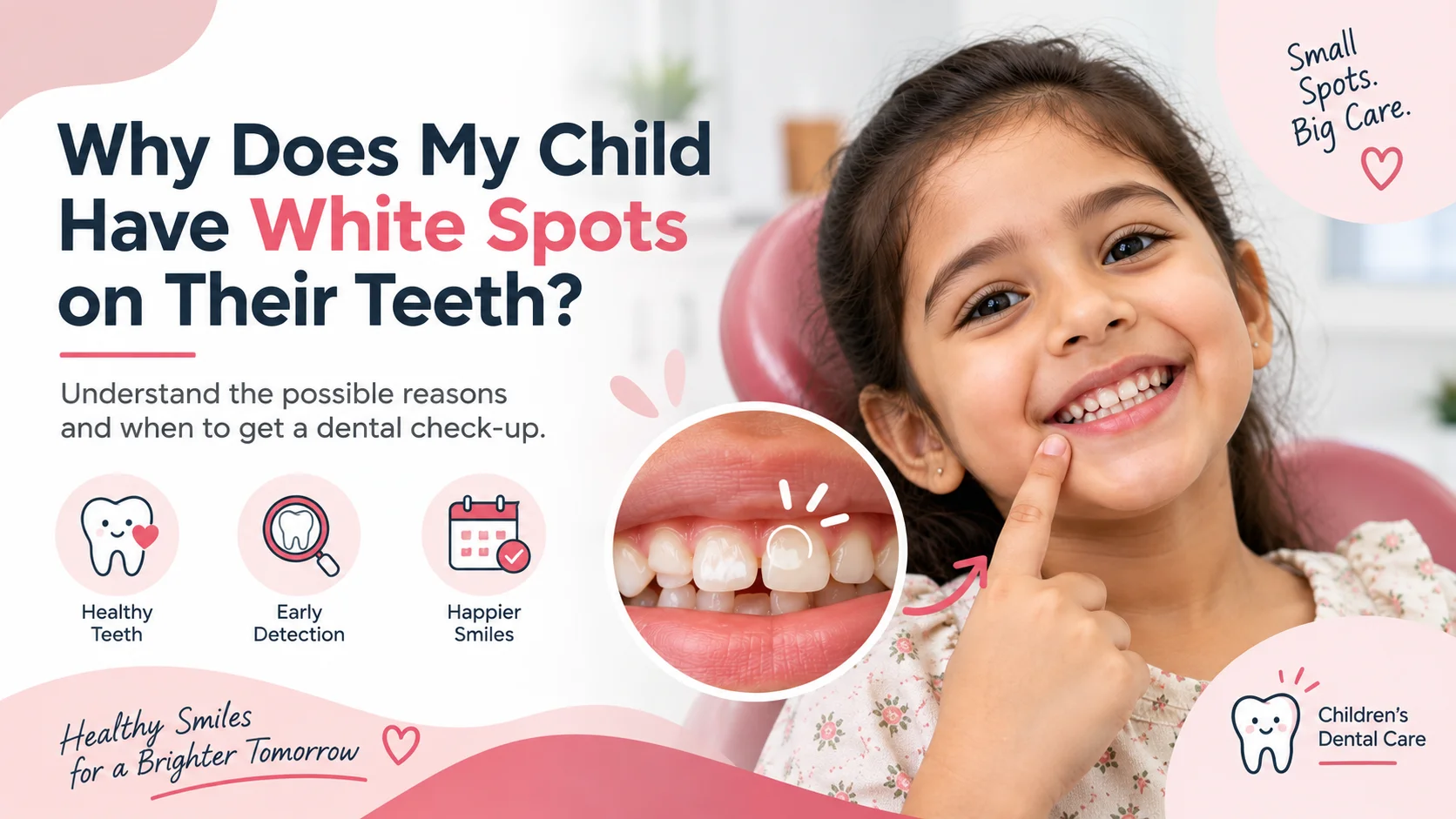
White spots on a child’s teeth can make parents wonder if something is wrong with their child’s teeth.
These marks can appear for different reasons. They may be related to enamel development, fluoride exposure during tooth development, or early tooth decay. Because these conditions can look similar, a dental examination helps identify the actual cause.
If you notice a new white patch on your child’s tooth, a dentist in Rewari can examine it and explain whether your child needs monitoring, preventive care, or treatment.
A white spot means that the appearance of the tooth enamel has changed.
The important point is that not every white spot has the same cause.
For example, early dental caries can produce white spot lesions because minerals are lost from the enamel. On the other hand, dental fluorosis can also appear as white lines or spots when excess fluoride is consumed while permanent teeth are developing.
The location, shape, texture and history of the tooth help a dentist understand the possible cause.
One possible cause is early dental caries.
Before a cavity becomes visible, the enamel can lose minerals and develop a white, chalky-looking area. The American Academy of Pediatric Dentistry considers white spot lesions an important indicator of caries activity.
Early assessment gives the dentist an opportunity to evaluate the child’s cavity risk and decide whether preventive care or treatment is appropriate.
Teeth develop inside the jaw before they appear in the mouth.
During this process, changes in enamel formation can sometimes create areas that look different from the surrounding tooth.
The appearance may vary from child to child. A pediatric dentist considers the child’s dental history and examines the affected teeth before identifying the likely cause.
Dental fluorosis can develop when a child consumes excess fluoride during the period when permanent teeth are forming.
Mild fluorosis may appear as white flecks or lines on the enamel. It does not develop after the tooth has erupted because fluorosis occurs while the tooth is developing.
This is one reason parents should use fluoride toothpaste in the recommended amount and supervise young children while brushing.
Sometimes a tooth develops with weaker or differently formed enamel.
These changes can affect the appearance of the tooth and may also influence its sensitivity or susceptibility to damage. A dental examination helps determine whether the tooth requires monitoring or additional care.
Parents usually cannot confirm the cause just by looking at the tooth.
A white area can have different causes, and early caries can appear before a visible hole develops. A dentist looks at the tooth carefully and considers factors such as oral hygiene, previous cavities, diet, fluoride exposure and the child’s overall caries risk.
So, if a white spot is new, changing or becoming more noticeable, it is sensible to have it checked.
Treatment depends on what caused the white spot.
A child may simply need observation and regular dental checks. In other situations, the dentist may recommend preventive measures such as fluoride care, dietary guidance or improved oral hygiene.
If the white area is associated with dental caries, the dentist chooses management based on the child’s age, caries risk and condition of the tooth. The AAPD recommends individualized caries assessment and management rather than using the same approach for every child.
This is why parents should avoid trying whitening products or home treatments without professional advice.
A few simple steps can help protect your child’s teeth.
The ADA and AAPD recognize fluoride toothpaste as an important part of preventing dental caries in children when used appropriately.
Book a dental examination if you notice:
A timely examination helps determine whether the change is related to enamel development, fluorosis, early caries or another dental condition.
Children’s teeth change continuously as baby teeth erupt, loosen and make way for permanent teeth.
That makes regular dental assessment useful beyond treating cavities. A pediatric dentist can monitor tooth development, identify early changes and guide parents about brushing, fluoride, diet and preventive care.
The AAPD recommends individualized preventive and treatment plans based on a child’s age, dental condition and caries risk.
At Dr. Sushma Yadav Children Dental Care in Rewari, pediatric dental care focuses on the oral health needs of growing children.
Dr. Sushma Yadav’s clinic provides preventive care, cavity treatment, fluoride treatments, dental sealants, habit counseling, emergency dental care and orthodontic assessment for children. The clinic has been providing pediatric dental care since 2016.
For parents looking for a pediatric dentist in Rewari, the clinic is located at Centre Point Complex near Nai Wali Chowk, Circular Road, Rewari.
Clinic Address
Centre Point Complex, Near Nai Wali Chowk
Circular Road, Rewari, Haryana 123401
Phone
+91 94676 76870
No. White spots can develop for several reasons. Early dental caries, enamel development changes and fluorosis can all affect the appearance of tooth enamel. A dental examination helps identify the likely cause.
Yes. White areas can appear on primary teeth for different reasons, including enamel changes and early dental caries. The cause needs to be assessed rather than assumed from appearance alone.
A white spot on a tooth does not automatically mean that a child has calcium deficiency. Several dental conditions can create similar changes in enamel, so parents should have the tooth examined before assuming a nutritional cause.
If the white spot represents an active early caries lesion, it can progress if the disease process continues. A dentist can assess the lesion and recommend appropriate preventive or treatment measures.
It is reasonable to have a new or changing white spot examined, especially if you are unsure when it appeared or if your child has other dental concerns.
Twice-daily brushing with fluoride toothpaste, appropriate dietary habits, regular dental examinations and preventive care based on the child’s individual caries risk all support good oral health.
White spots on children’s teeth can have different causes, so their appearance alone does not always tell you what is happening.
They may be linked to early tooth decay, enamel development or fluorosis. A pediatric dental examination helps identify the cause and determine whether your child needs preventive care, monitoring or treatment.
For parents searching for a dentist in Rewari, early dental assessment can help keep track of your child’s teeth as they grow and develop.

