
dr.SushmaYadav
First Pediatric Dentist in Rewari
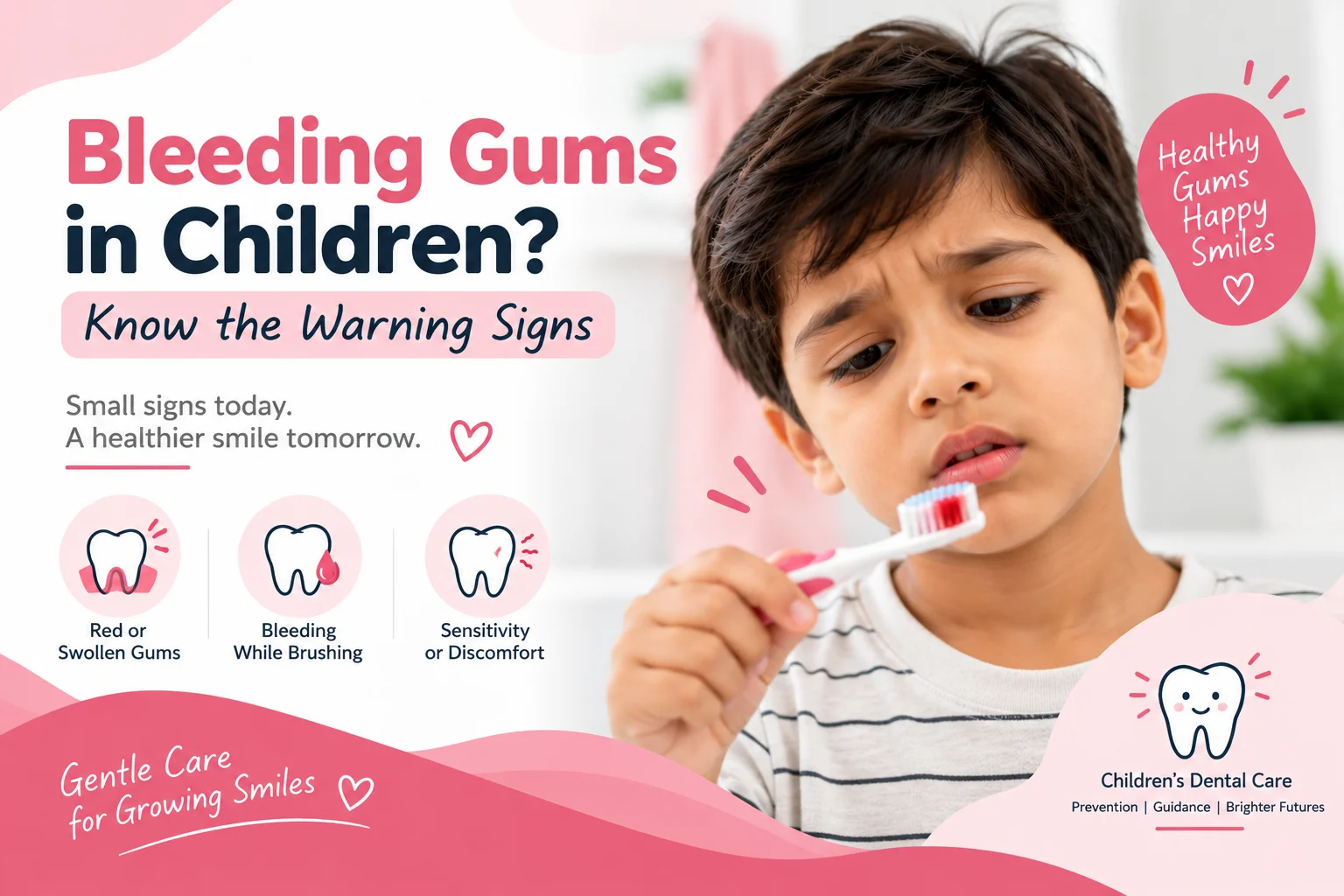
Seeing blood around your child’s gums while brushing can be concerning. In many children, bleeding gums are associated with gum inflammation and plaque buildup, especially around the gumline. However, bleeding can have different causes. The appearance of the gums, your child’s brushing routine, dental development and overall oral health all help a dentist understand what is happening. The American Academy of Pediatric Dentistry recommends assessing periodontal health as part of routine dental examinations for children.
If your child’s gums bleed regularly, a dentist in Rewari can examine the teeth and gums and help you understand what needs attention.
Bleeding usually occurs when the gum tissue becomes irritated or inflamed. One common reason is plaque, a sticky biofilm that forms on teeth and around the gumline.
When plaque remains in place, it can contribute to gingivitis. Children can develop plaque-induced gingivitis, and bleeding can be one sign of inflamed gums.
Still, parents should not assume that every instance of bleeding has the same cause. A dental examination is the best way to assess persistent or recurring bleeding.
Children may brush every day but still miss the area where their teeth meet their gums.
Plaque can collect in these areas and irritate the gum tissue. With continued buildup, the gums may look red or swollen and can bleed when brushed.
The AAPD identifies plaque biofilm-induced gingivitis as a common category of gingival disease in pediatric patients.
Young children are still learning how to brush effectively.
They may clean the front surfaces of their teeth but miss the back teeth or gumline. Some children also brush for a very short time or need help reaching difficult areas.
The American Dental Association recommends brushing twice a day with fluoride toothpaste. Children should use an appropriately sized toothbrush, and younger children should receive assistance or supervision from an adult.
Gingivitis means inflammation of the gums.
In children, plaque-related gingivitis can cause redness, swelling and bleeding. The AAPD notes that gingival inflammation is common during childhood and adolescence, while destructive periodontal disease is much less common.
This distinction matters because bleeding gums do not automatically mean that a child has advanced gum disease.
A toothbrush cannot clean every area between teeth.
When two teeth touch, plaque can remain in the space between them. If these areas are not cleaned, the surrounding gums can become irritated.
The ADA recommends cleaning between teeth as part of daily oral care because toothbrush bristles cannot effectively reach every interdental surface.
Ask your child’s dentist which method is suitable for their age and tooth arrangement.
Children’s mouths change continuously.
Baby teeth loosen, permanent teeth erupt and the spaces between teeth change. During these stages, some areas can become harder to clean properly.
Regular dental examinations allow the dentist to monitor the developing teeth and bite while also checking the gums. The AAPD recommends ongoing assessment based on each child’s individual oral health needs and risk factors.
Good gum care starts with simple daily habits.
Children should brush their teeth regularly and learn to clean along the gumline without aggressive scrubbing. Younger children often need an adult to help or supervise brushing.
The ADA recommends brushing twice a day for two minutes with fluoride toothpaste. For children younger than three, the recommended amount is a smear about the size of a grain of rice. From ages three to six, a pea-sized amount is recommended, with adult supervision.
The exact routine can be adjusted according to your child’s age and dental needs.
Usually, no.
Parents sometimes stop brushing the area because they think the toothbrush is causing the bleeding. However, if plaque is contributing to gum inflammation, avoiding the area can allow more plaque to remain.
Instead, use a soft-bristled toothbrush and gentle movements around the gumline.
If bleeding continues or happens frequently, arrange a dental examination. Your child may need help improving brushing technique or may need further evaluation of the gums.
Good technique is especially important when children are still learning to brush.
Use a small, child-sized toothbrush with soft bristles. Guide the brush along the gumline and clean all tooth surfaces.
The ADA recommends gentle short strokes and positioning the brush toward the gumline. Children should continue receiving adult supervision until they can brush effectively on their own.
Parents can make brushing easier by turning it into a regular morning and bedtime routine.
If two teeth touch each other, brushing alone may not clean the entire space.
Cleaning between teeth helps remove plaque from areas that toothbrush bristles cannot reach effectively. The appropriate method depends on the child’s age, tooth arrangement and ability to cooperate.
A pediatric dentist can demonstrate the technique and tell you whether your child needs daily interdental cleaning.
A dental examination is useful when bleeding happens repeatedly or when you notice other changes.
Parents should arrange a check-up if their child has:
Persistent bleeding deserves attention because the underlying cause needs to be identified rather than assumed.
A pediatric dental examination looks beyond cavities.
The dentist can assess the:
The dentist may also ask about your child’s brushing habits, diet and any changes you have noticed.
The AAPD recommends periodontal risk assessment and oral health evaluation as part of pediatric dental care.
If the dentist finds plaque-related gum inflammation, the focus may be on improving oral hygiene and removing contributing factors. Other findings may require a different approach.
Many everyday habits can support healthy gums.
Use fluoride toothpaste and help younger children brush effectively. The ADA recommends twice-daily brushing with fluoride toothpaste.
When teeth touch, clean between them using an age-appropriate method recommended by your dentist.
Routine dental examinations help monitor the teeth, gums and developing bite.
The AAPD emphasizes early professional dental care and continued assessment based on a child’s individual needs.
Children learn oral hygiene through repetition and parental guidance. Making brushing part of the daily routine helps children develop habits they can maintain as they grow.
Parents searching for a dentist in Rewari can visit Dr. Sushma Yadav Children Dental Care for pediatric dental care.
Dr. Sushma Yadav provides dental care for children in Rewari, with a focus on preventive care, developing teeth and age-appropriate oral health guidance.
The clinic is located at Centre Point Complex near Nai Wali Chowk, Circular Road, Rewari, Haryana 123401.
Phone
+91 94676 76870
For a child with recurring gum bleeding, an examination can help identify the cause and provide parents with practical guidance for daily oral care.
Plaque-related gum inflammation is a common reason for bleeding gums in children. However, recurring bleeding should be evaluated by a dentist so the underlying cause can be identified.
It can be. Gingivitis is inflammation of the gums and may cause bleeding during brushing or cleaning between the teeth. Plaque-induced gingivitis is common in children and adolescents.
Usually, no. Gentle and consistent oral hygiene remains important. If the bleeding continues or occurs regularly, arrange a dental examination.
The ADA recommends brushing twice a day with fluoride toothpaste. Younger children should be assisted or supervised by an adult.
Yes. Children can develop gingival and periodontal conditions. Plaque-induced gingivitis is common, while destructive periodontal disease is less common in children.
Arrange a dental examination when gum bleeding keeps returning, particularly if it occurs with swelling, tenderness, persistent bad breath or other changes in the mouth.
Bleeding gums in children are often linked to gum inflammation and plaque, but repeated bleeding should not be ignored.
Regular brushing, appropriate cleaning between teeth and professional dental examinations help parents monitor their child’s oral health as the teeth and gums develop.
If your child’s gums bleed regularly, a dentist in Rewari can examine the gums, identify the likely cause and provide guidance based on your child’s individual needs.

