
dr.SushmaYadav
First Pediatric Dentist in Rewari
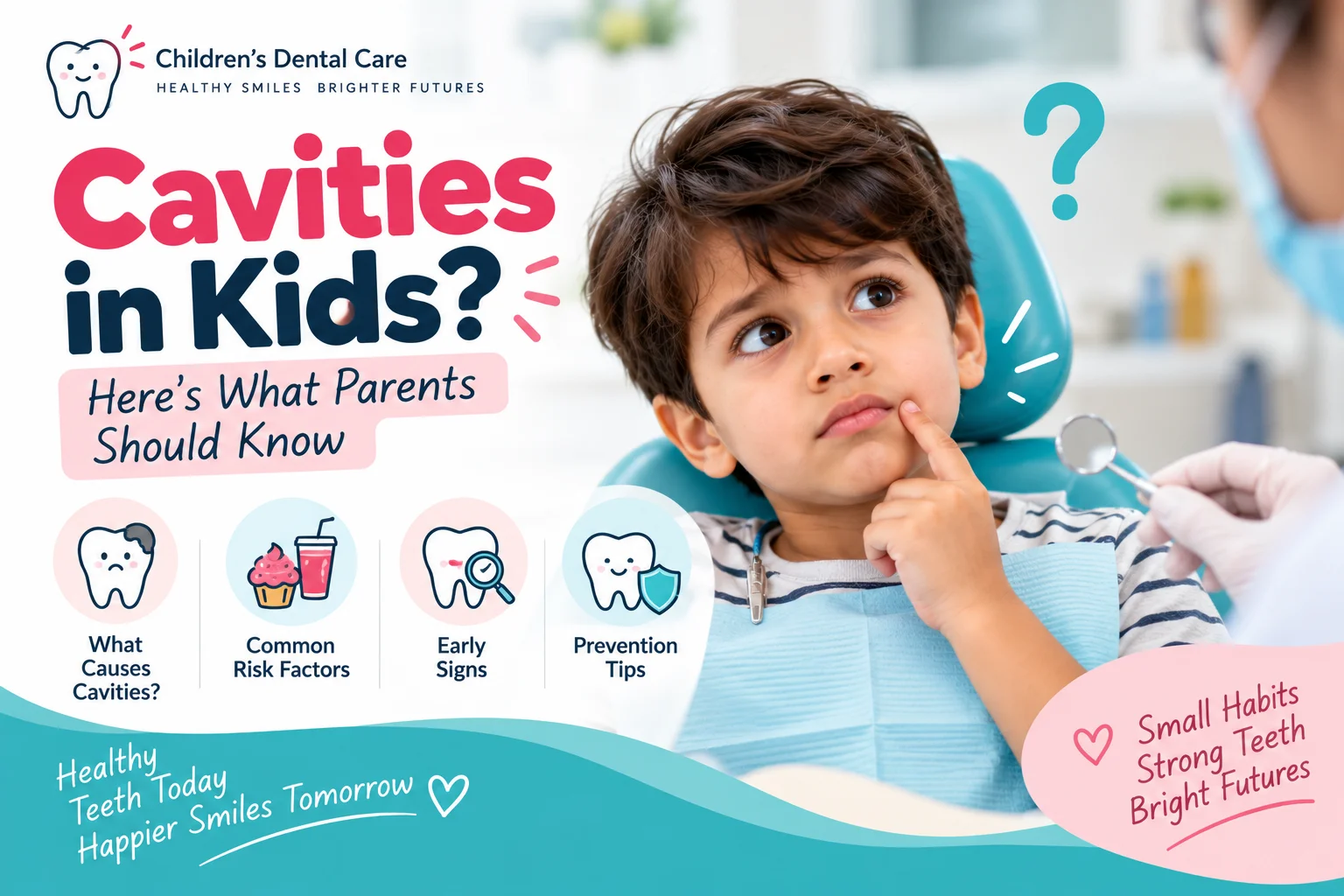
Seeing a cavity in your child’s tooth can be worrying, especially when you know they brush their teeth every day. Many parents immediately wonder how tooth decay happens despite regular brushing. The truth is that cavities in children can develop for several reasons. Brushing is important, but cavity prevention also depends on diet, fluoride exposure, plaque control, tooth anatomy, oral hygiene habits and regular dental care. The risk can also vary from one child to another.
If you notice a white spot, brown mark, food getting stuck in one area, tooth sensitivity or a child complaining of tooth pain, it is worth having the tooth checked rather than waiting for the problem to become painful.
A cavity is an area of tooth decay that develops when acids produced by bacteria in dental plaque gradually damage the tooth.
Plaque forms naturally on teeth. When children frequently consume sugary or carbohydrate-rich foods and drinks, bacteria in plaque can produce acids that attack the tooth surface. Over time, repeated acid attacks can weaken the enamel and lead to a cavity.
This process does not happen overnight. It develops over time, which is why regular brushing, healthy eating habits and dental check-ups can make a real difference.
This is one of the most common questions parents ask.
A child may brush every day and still develop cavities because brushing is only one part of cavity prevention.
The amount and frequency of sugar exposure matter. Frequent snacking on sweets, biscuits, chocolates or other sugary foods gives cavity-causing bacteria more opportunities to produce acids.
Sugary drinks can also contribute to tooth decay, particularly when children sip them frequently throughout the day. Limiting sugary snacks between meals is an important part of caries prevention.
Children often find it difficult to clean every tooth surface properly.
Back teeth have natural grooves and pits where food and plaque can collect. These areas can be harder to reach with a toothbrush and may have a higher risk of decay.
Young children are still learning how to brush effectively. They may brush quickly or miss the back teeth, gumline and other difficult areas.
Parents may need to supervise or help with brushing until the child has developed good brushing skills.
Cavity risk is not the same for every child.
A pediatric dentist considers factors such as previous cavities, oral hygiene, diet, fluoride exposure, tooth condition and other clinical or behavioural factors when assessing a child’s risk.
Cavities do not always cause pain in the beginning.
Parents may notice
Sometimes, a cavity is found during a routine dental examination before the child notices anything at home.
That is one reason regular dental visits are useful, even when your child seems completely comfortable.
Yes. Baby teeth can develop cavities just like permanent teeth.
It is tempting to think that decay in a baby tooth does not matter because the tooth will eventually fall out. However, untreated decay can cause pain and infection and can interfere with eating, speaking and everyday activities.
Keeping baby teeth healthy also helps children maintain good oral function while their permanent teeth develop.
So, a cavity in a baby tooth deserves attention rather than simply being ignored.
Cavity prevention works best when several simple habits come together.
Children should brush their teeth twice a day using fluoride toothpaste. The appropriate amount depends on the child’s age.
For children under 3 years, the ADA recommends a smear of fluoride toothpaste about the size of a grain of rice. From age 3 onward, a pea-sized amount is generally recommended. Children should be supervised and encouraged to spit out excess toothpaste.
Your child’s dentist can give more specific advice based on age and cavity risk.
Try to reduce frequent sugary snacking.
Instead of allowing a child to keep eating small amounts of sugary foods throughout the day, parents can work toward structured meals and snacks with healthier food choices.
The goal is not to make every meal perfect. Consistent everyday habits matter more.
Water is a simple drink choice between meals. Where community water is fluoridated, it can also contribute to cavity prevention.
Children may want to brush independently, which is a good way to build the habit. However, younger children often still need supervision or help to clean all tooth surfaces effectively.
The chewing surfaces of molars contain natural pits and grooves that can collect plaque and food particles.
For children at appropriate ages and risk levels, a dentist may recommend dental sealants. Sealants create a protective barrier over susceptible pits and fissures and are part of comprehensive cavity prevention.
Fluoride helps strengthen teeth and prevent or slow tooth decay. Depending on a child’s individual risk, a dentist may recommend additional fluoride treatment such as professional fluoride application.
The right approach depends on the child’s age, oral health, fluoride exposure and cavity risk.
Do not wait for severe tooth pain before arranging a dental appointment.
A dental check-up is especially important if your child has
A dentist can examine the teeth, assess cavity risk and recommend preventive or restorative care based on what the child needs. The AAPD recommends individualized caries-risk assessment and management rather than using exactly the same approach for every child.
Treatment depends on how far the decay has progressed, which tooth is affected, the child’s age and overall cavity risk.
A dentist may recommend preventive care for early changes, while a more developed cavity may require restorative treatment. In some situations, treatment is needed to manage infection or protect the tooth.
The important point is that not every cavity looks or behaves the same way. A dental examination helps determine what is appropriate instead of waiting until the tooth becomes painful.
A child can have developing tooth decay without complaining about pain.
Regular dental visits allow the dentist to look for early changes, monitor developing teeth and discuss brushing, diet, fluoride and other preventive measures.
The AAPD recommends establishing a dental home early and using periodic visits along with individualized caries-risk assessment and preventive care.
For parents, this also creates an opportunity to ask practical questions such as whether the child is brushing correctly, whether fluoride protection is appropriate and whether dental sealants may be useful.
Parents do not need a complicated routine.
A practical approach is
Small habits repeated every day can help protect children’s teeth as they grow.
Parents looking for a dentist in Rewari can consider a pediatric-focused dental clinic when their child needs age-appropriate preventive care or treatment.
Dr. Sushma Yadav Children Dental Care in Rewari focuses on children’s dental care, including preventive dentistry, restorative treatment, habit counselling and other pediatric dental needs.
The clinic is located at Centre Point Complex near Nai Wali Chowk, Circular Road, Rewari, Haryana 123401.
If your child already has a cavity, has repeated dental problems or you simply want to understand their cavity risk, a dental examination can help identify what needs attention.
Brushing helps remove plaque, but cavities are influenced by several factors. Diet, frequent sugar exposure, brushing effectiveness, tooth anatomy, fluoride exposure and individual cavity risk can all play a role.
They can be. Untreated decay can cause pain and infection and may affect eating, speaking and daily activities. Baby teeth therefore still need proper dental care.
Regular brushing with fluoride toothpaste, limiting frequent sugary foods and drinks, maintaining good oral hygiene and attending dental check-ups are important preventive steps. Depending on the child’s risk, a dentist may also recommend fluoride treatments or sealants.
Not necessarily. Sealants can help protect susceptible pits and fissures, particularly on molars, but the decision depends on the child’s teeth and cavity risk. A dentist can assess whether they are appropriate.
Arrange a dental examination if you notice a visible spot or hole, tooth sensitivity, pain, swelling or repeated food trapping. Earlier assessment can help identify the problem and determine the appropriate treatment.
Cavities in kids are common, but they are not something parents have to simply wait for.
Good brushing is important, but cavity prevention involves much more than brushing alone. Healthy eating habits, fluoride, proper plaque removal, regular dental visits and preventive treatments when appropriate all work together.
If your child has a new spot on a tooth, recurring cavities or tooth pain, getting it checked early can help you understand the cause and protect their growing smile.

