
dr.SushmaYadav
First Pediatric Dentist in Rewari
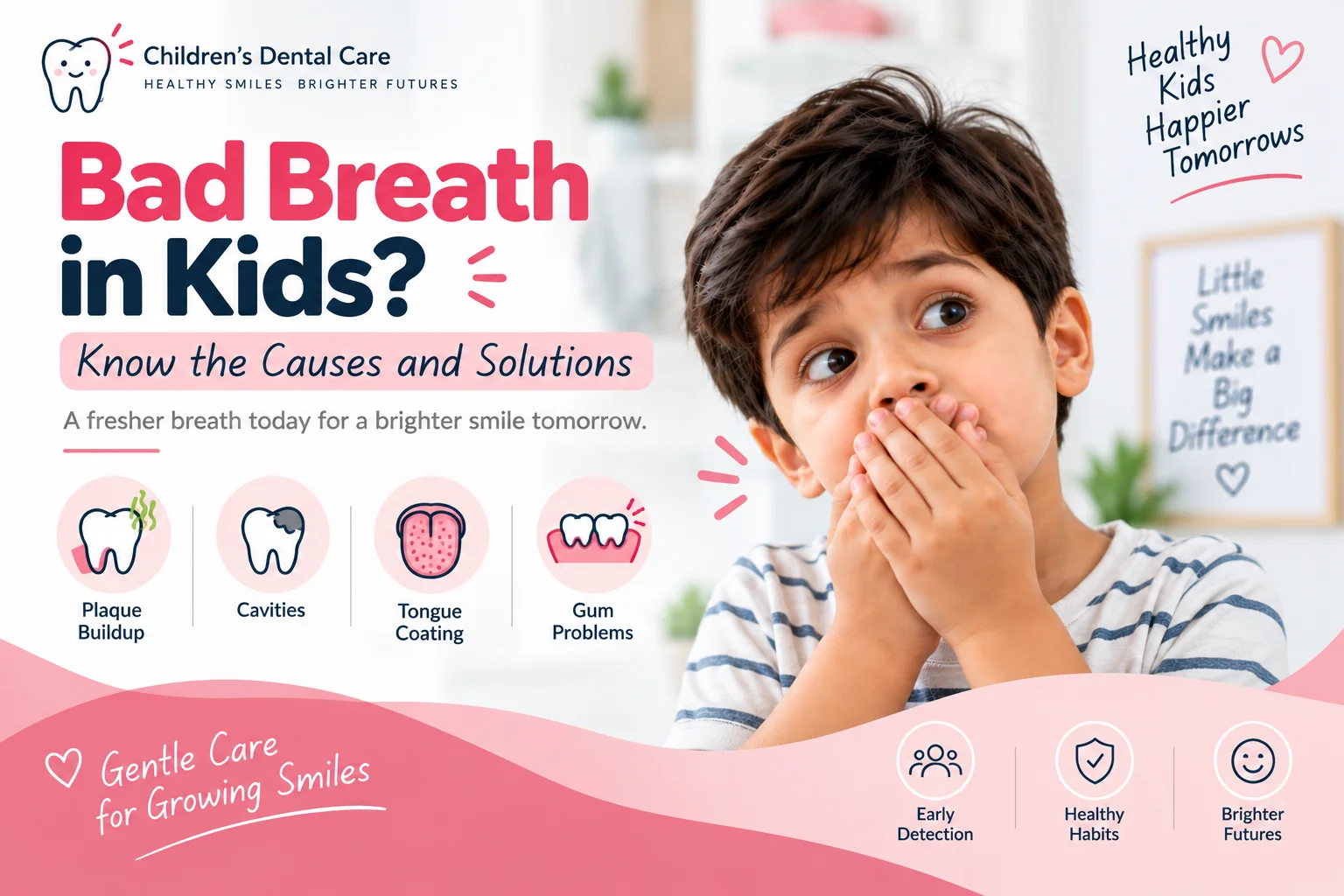
Bad breath in children can sometimes happen after eating certain foods or after a long period without brushing. However, persistent bad breath deserves attention, especially when it continues even after regular brushing.
In many cases, the source is inside the mouth. Plaque, bacteria, tongue coating, cavities and gum problems can contribute to oral malodor. The American Dental Association notes that compounds produced by oral bacteria and plaque are major contributors to bad breath.
If your child regularly has an unpleasant mouth odour, a dentist in Rewari can examine the teeth, gums and oral tissues to help identify the cause.
Bad breath, also called halitosis, can have different causes.
The most common causes are related to oral hygiene, but the child’s dental condition and general health also matter.
Plaque is a sticky biofilm that forms on teeth and around the gumline.
When plaque remains on the teeth, bacteria can produce compounds that contribute to unpleasant breath. The tongue can also hold bacteria and food debris, making tongue cleaning an important part of oral hygiene.
This is why regular brushing alone may not always solve persistent bad breath if other areas are being missed.
Food can remain between closely spaced teeth.
If the area is not cleaned, bacteria can act on the remaining debris and contribute to unpleasant odour.
Cleaning between teeth is therefore an important part of daily oral care. The ADA recommends interdental cleaning because toothbrush bristles cannot effectively reach every area between touching teeth.
The tongue has a textured surface where bacteria and debris can collect.
A coated tongue can contribute to bad breath because oral bacteria on the tongue can produce odour-causing compounds.
Parents can ask their child’s dentist whether gentle tongue cleaning is appropriate for their child.
Dental cavities can sometimes contribute to bad breath.
A cavity creates an area where food and bacteria can remain more easily. Persistent bad breath alongside toothache, visible tooth damage or sensitivity should therefore be evaluated by a dentist.
Bad breath can be associated with dental problems such as tooth decay and gum disease.
Inflamed gums can also contribute to unpleasant breath.
Children can develop plaque-induced gingivitis. Signs may include red or swollen gums and bleeding during brushing. The AAPD recognizes plaque-induced gingivitis as a common gingival condition in children and adolescents.
If your child has both bad breath and bleeding gums, a dental examination can help determine whether gum inflammation is contributing to the problem.
Brushing is important, but it may not remove every possible source of bad breath.
For example, your child may brush the teeth but miss the gumline, tongue or spaces between the teeth. A cavity or gum inflammation can also continue to produce unpleasant odour even when the teeth appear clean.
The goal should therefore be to identify why the bad breath keeps returning, rather than simply covering it with a flavoured product.
Mouth breathing can contribute to oral dryness, and reduced saliva can affect the mouth’s normal protective functions.
Saliva helps cleanse the mouth and protect oral tissues. Reduced salivary flow can be associated with dry mouth and halitosis.
If your child frequently sleeps with their mouth open, complains of a dry mouth or regularly has bad breath, mention these observations during a dental visit.
A dentist can assess the mouth and advise whether further evaluation is appropriate.
Not always.
Bad breath can occur temporarily after certain foods or when oral hygiene has been inconsistent. However, persistent bad breath can sometimes point to an oral health problem.
Look at the bigger picture.
If bad breath occurs together with:
it is worth arranging a dental check-up.
Start with the basics of daily oral hygiene.
Help your child brush twice a day using fluoride toothpaste.
Younger children often need assistance or supervision because they are still developing the coordination needed to clean every tooth surface effectively. The AAPD recommends age-appropriate oral hygiene guidance and continued parental involvement as children develop.
When teeth touch, brushing cannot reach the entire space.
Ask your child’s dentist about an appropriate flossing or interdental cleaning method.
A gentle approach to tongue cleaning can help remove surface debris.
There is no need to scrub aggressively. If your child finds tongue cleaning uncomfortable, discuss the best approach with the dentist.
Water helps support normal hydration.
If your child frequently has a dry mouth, tell the dentist. Persistent oral dryness can have several causes and may increase the risk of oral problems.
Regular dental examinations allow the dentist to check for cavities, gum inflammation and other oral conditions.
The AAPD recommends establishing a dental home early and continuing preventive care according to the individual needs of the child.
Mouthwash is not a replacement for brushing and cleaning between teeth.
The ADA notes that some therapeutic mouthrinses can help control bad breath, but children younger than six should not use mouthrinse unless directed by a dentist because they may swallow it.
For a child with persistent bad breath, it is better to identify the underlying cause before choosing a mouthwash.
Consider a dental examination when bad breath:
Persistent bad breath should not simply be covered with mints or mouthwash.
A dental examination can help determine whether the source is plaque, the tongue, gums, teeth or another oral condition.
A pediatric dental visit looks at more than just cavities.
The dentist can examine:
The AAPD recommends comprehensive oral assessment and individualized preventive guidance throughout childhood.
If the dentist finds an oral cause for the bad breath, treatment focuses on that underlying issue rather than simply masking the smell.
A consistent routine makes a difference.
Parents can help children:
Good oral hygiene supports both fresh breath and healthy teeth and gums.
If your child has persistent bad breath, parents looking for a dentist in Rewari can consult Dr. Sushma Yadav Children Dental Care.
Dr. Sushma Yadav provides pediatric dental care focused on children’s developing teeth, preventive oral health and age-appropriate dental guidance.
The clinic is located at:
Centre Point Complex, Near Nai Wali Chowk
Circular Road, Rewari, Haryana 123401
Phone
+91 94676 76870
A dental examination can help parents understand whether their child’s bad breath is related to oral hygiene, cavities, gum health or another concern.
Morning breath can occur because saliva flow changes during sleep and bacteria can accumulate in the mouth. However, bad breath that continues throughout the day or returns frequently should be evaluated.
They can. Tooth decay can create areas where bacteria and food debris accumulate, and dental problems such as cavities can be associated with bad breath.
Yes. Inadequate removal of plaque and debris can allow oral bacteria to produce odour-causing compounds.
Gentle tongue cleaning can be part of oral hygiene. Parents should avoid aggressive scraping and can ask their child’s dentist for age-appropriate guidance.
Children under six should not use mouthwash unless a dentist specifically recommends it, because they may swallow it. Mouthwash also does not replace brushing and interdental cleaning.
Arrange a dental check-up if the bad breath persists despite good oral hygiene or occurs with toothache, cavities, bleeding gums, swelling, discomfort or other changes in the mouth.
Persistent bad breath in children is worth checking rather than simply masking.
Plaque, tongue coating, cavities and gum inflammation can contribute to oral malodor. In some children, dry mouth or other factors may also play a role.
Good brushing, cleaning between teeth, appropriate tongue care and regular dental visits help support healthy oral hygiene.
If your child’s bad breath keeps returning, a dentist in Rewari can examine the mouth and help identify the underlying cause.

